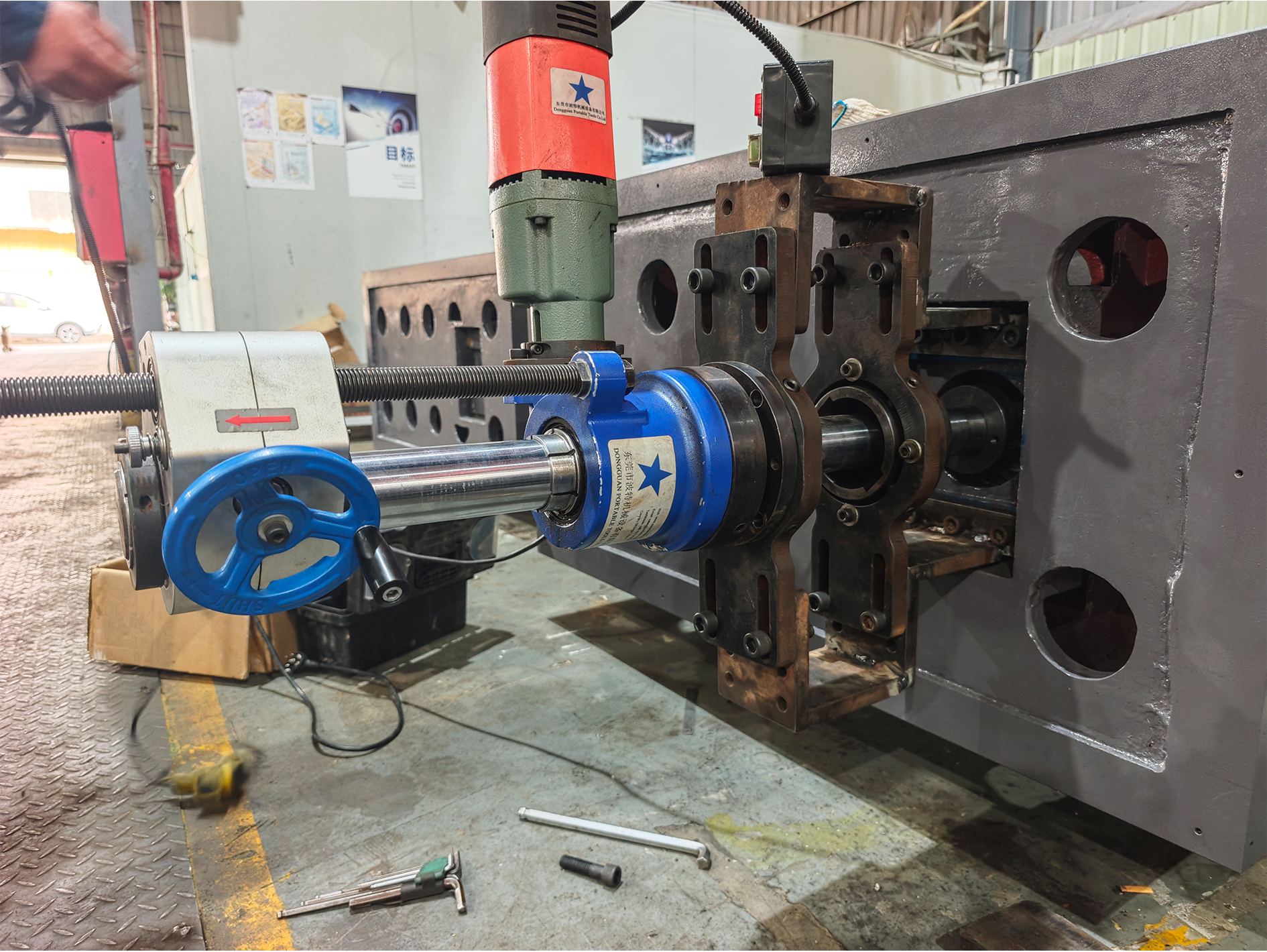
Revolutionizing On-Site Machining: The
Portable Line Boring Machine In the dynamic world of industrial maintenance and repair, the portable line boring machine stands out as a game-changer, enabling precise boring operations directly at the job site. Unlike traditional methods that require dismantling and transporting heavy equipment, this innovative tool brings the workshop to the field, saving time and resources across various sectors.Portable line boring machines find extensive applications in industries where downtime is costly and logistics are challenging. In construction, they are used to repair bores in heavy machinery like excavators and cranes, restoring pivot points and hinge holes that wear out from constant use. For example, on a bustling construction site, a portable line boring machine can quickly align and re-bore the arm joints of a backhoe without halting operations for days. In mining, these machines address issues in drill rigs and conveyor systems, where oversized components such as bucket wheel excavators demand on-site fixes to prevent production losses. The maritime industry benefits too, with applications in shipbuilding and repair, such as boring propeller shafts or engine mounts on vessels docked at ports. Additionally, in power generation, they maintain turbine casings and generator housings in remote wind farms or hydroelectric plants, ensuring minimal interruption to energy supply. Even in aerospace, portable line boring machines handle landing gear repairs on aircraft, where precision is paramount and transporting parts to a distant facility is impractical.One of the most compelling advantages of the portable line boring machine over heavy workshop machining lathes is its mobility and efficiency. Heavy workshop machining lathes, while powerful for large-scale production, are stationary behemoths that necessitate shipping bulky parts—often weighing tons—to a centralized facility. This process involves cranes, specialized transport, and extended lead times, escalating costs and risks of further damage during transit. In contrast, a portable line boring machine is compact, weighing significantly less, and can be operated by a small team in confined or elevated spaces. Setup is straightforward, often taking mere hours, allowing for immediate repairs that reduce equipment idle time from weeks to days.When comparing variants, light line boring tools are ideal for smaller, intricate tasks, offering high precision with minimal setup for bores under a few inches in diameter. They complement portable systems by providing finesse in applications like automotive repairs or small machinery. On the other hand, heavy line boring machines are designed for massive industrial bores, such as those in oil rigs or bridges, but they sacrifice portability for sheer power, often requiring more robust support structures. The portable line boring machine strikes a perfect balance, incorporating elements of both while prioritizing field usability.Beyond technical superiority, these machines promote safety by minimizing the need for heavy lifting and reducing exposure to hazards associated with part transportation. Environmentally, they cut down on fuel consumption from shipping, aligning with sustainable practices in modern industry. Cost-wise, businesses report savings of up to 50% on repair projects, as on-site work eliminates overheads like workshop rentals and overtime labor.As a leader in portable on-site tools, ZHENGZHOU PORTABLE TOOLS CO., LTD has been at the forefront of this innovation. Upholding the principle of quality first, we deliver customized services tailored to clients’ field machining needs. Our range of portable line boring machines is engineered with durable materials and advanced features like digital alignment systems, ensuring reliability in the harshest environments. From initial consultation to post-service support, we collaborate closely with customers to design solutions that fit specific requirements, whether it’s adapting tools for unique bore sizes or integrating them with existing workflows. With a commitment to excellence, ZHENGZHOU PORTABLE TOOLS CO., LTD empowers industries worldwide to achieve seamless, efficient repairs, driving productivity and longevity in their operations.In summary, the portable line boring machine not only transforms how repairs are conducted but also sets a new standard for efficiency and adaptability in machining. By choosing portable solutions, companies can future-proof their maintenance strategies against the demands of an ever-evolving industrial landscape.